
Check the tin first: water-based paint washes out of brushes with warm, soapy water, while oil-based paint needs white spirit or a brush cleaner first, followed by a wash in soapy water. Either way, brush out as much paint as you can before any cleaning starts.
At PDS Painting Birmingham our decorators keep good brushes going for years, and the method below is how we do it - plus how to store brushes between coats and get rid of paint water without polluting drains.
First, Check What Paint You Used
The tin tells you how to clean up. Look on the back for a line such as “clean equipment with water” or “clean equipment with white spirit”. If you’ve lost the tin and you’re dealing with old woodwork paint, rub a hidden spot with a cotton bud dampened with methylated spirit - if the paint softens and colour comes off, it’s likely water-based; if nothing happens, treat it as oil-based. Our guide to water-based vs oil-based paint explains the difference.
Cleaning Brushes After Water-Based Paint
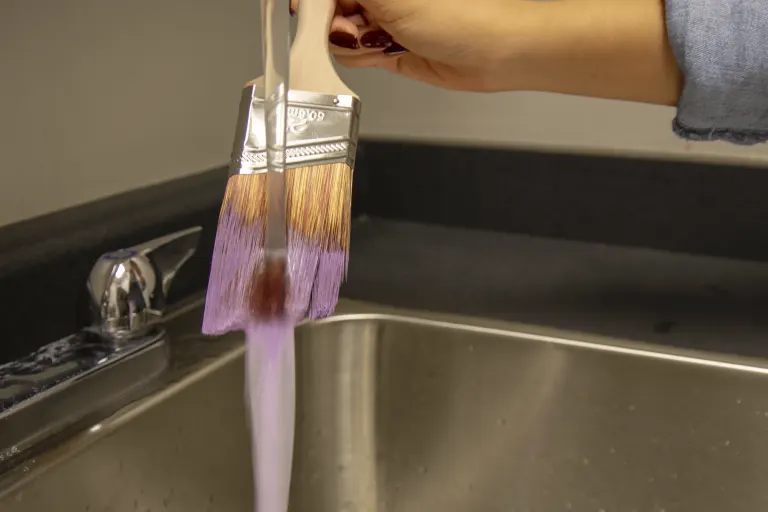
- Brush out the excess. Work the brush back and forth on newspaper or card until it leaves hardly any paint. This is the step most people skip, and it does half the job.
- Wash in warm soapy water. Fill a bucket with warm (not hot) water and a squeeze of washing-up liquid. Work the bristles against the bottom of the bucket and squeeze them with your fingers, especially up near the ferrule (the metal band) where paint hides.
- Comb it through. Run a brush comb from the ferrule to the tips to pull out paint caught deep in the bristles.
- Rinse until clear. Rinse in clean water, or under a running tap, until the water runs clear with no colour at all.
- Spin or flick out the water. Flick it firmly into an empty bucket or outside, or roll the handle between your palms inside a bucket.
- Reshape and dry. Smooth the bristles back into shape, then dry the brush hanging from its handle or lying flat - never standing on its bristles. Some decorators wrap the head in paper or the original card sleeve to keep the shape.
Cleaning Brushes After Oil-Based Paint
- Brush out the excess onto newspaper or card, as above.
- Use two jars of solvent. Pour a little white spirit or brush cleaner into two clean jars. Work the brush through the first jar, pressing the bristles against the sides, until most of the colour has gone.
- Finish in the second jar. Swirl it through the cleaner second jar to remove the remaining paint.
- Wash out the solvent. Wash the brush in warm soapy water, rinse well and comb through.
- Dry as above, hanging or flat.
Work outdoors or in a well-ventilated room, wear gloves, and keep solvents away from naked flames, boilers and pilot lights. Follow the safety advice on the solvent’s label, and dry solvent-soaked rags flat outdoors before binning them.
Cleaning Paint Rollers
Scrape as much paint as possible back into the tin before you wash anything - a roller scraper or the curved edge of a filling knife run down the sleeve takes out a surprising amount. Then rinse the sleeve under running water or in a bucket, squeezing it out repeatedly, until the water runs clear. Spin it out, then stand it on end to dry so the pile doesn’t flatten.
With oil-based paint, cleaning a sleeve properly takes a lot of solvent. Cheap sleeves often aren’t worth the effort - let the paint dry on them and bin them.
Disposing of Paint Water and Solvent Responsibly
Never pour paint water, white spirit or leftover paint down an outside drain. Many outside drains carry surface water straight to streams and rivers, untreated.
For water-based paint, let the rinse water stand in a bucket for a day or two so the solids settle. Pour the clearer water off carefully, leave the sludge to dry out, then bin it as your council advises.
Keep used white spirit in a sealed, labelled jar. The paint settles to the bottom over a few days, and the clear solvent on top can be poured off and reused.
Take leftover paint and solvents to a household recycling centre. Check Birmingham City Council’s household recycling centre guidance before you go, as rules on what each site accepts can change.
Between Coats: Keeping Brushes Wet Overnight
Decorators don’t wash brushes between every coat. If you’re using the same paint again within a day, wrap the loaded brush or roller tightly in cling film or put it in a sealed plastic bag, squeezing the air out. It stays wet and ready to use, and saves water and paint going down the sink.
For oil-based work over several days, some decorators suspend brushes in a brush keeper - a sealed container that holds the bristles in a liquid without them touching the bottom. Wipe the brush on card before using it again.
Rescuing Brushes With Dried Paint
A brush with paint dried into it can often be saved. Soak it in a brush restorer, following the label for soaking time and ventilation, then work the softened paint out with a brush comb and wash it in warm soapy water.
If the bristles are still stiff, splayed or packed solid at the ferrule after a second go, replace it. A cheap brush that’s gone hard isn’t worth the restorer.
Mistakes That Ruin Good Brushes
- Leaving brushes standing on their bristles in water. They bend permanently.
- Letting paint dry in the ferrule. The bristles splay and won’t hold an edge.
- Using very hot water. It can loosen the glue that holds the bristles.
- Drying with a hairdryer or on a radiator. Heat damages synthetic bristles.
- Storing brushes damp in a sealed bag for days. They go mouldy and smell.
Why Decorators Care About Clean Brushes
A well-kept brush holds a fine, sharp edge, and that’s what lets a decorator cut in a straight line between wall and ceiling freehand. If you’d rather skip both the painting and the clean-up, our interior painting and decorating in Birmingham service covers homes across the city.
Related Guides
- Paint finishes explained - matt to gloss, and water-based against oil-based.
- Painting skirting boards, woodwork and radiators - step-by-step methods for fiddly surfaces.
- Paint drying times and coats - how long to leave between coats.
Find more painting and decorating guides on our guides page.
Brush Cleaning Questions
Can you clean oil-based paint brushes with water?
Not on their own. Water just beads off oil-based paint and leaves it to harden in the bristles. Work the brush through white spirit or a brush cleaner first, as the tin directs, until most of the colour has gone. Then wash it in warm soapy water to remove the solvent, rinse, comb and dry it.
Can I leave paint brushes in water overnight?
Not standing on their bristles - the weight bends them, and they dry with a permanent curl that ruins cutting in. If you're carrying on tomorrow with the same paint, wrap the loaded brush tightly in cling film or a sealed bag instead. It will be ready to use straight away in the morning, with no washing or drying needed.
Can I wash paint brushes in the sink?
For water-based paint, yes, once you've brushed out as much paint as possible onto card or newspaper. Most of the paint should end up in the bin, not the water. Never pour white spirit, oil-based paint or paint sludge down any drain, and never down an outside drain - check your water company's and council's guidance if unsure.
How do I soften a paint brush that has gone hard?
Soak it in a brush restorer, following the label for soaking time and ventilation. Once the paint has softened, work it out with a brush comb, then wash the brush in warm soapy water and rinse. If the bristles stay stiff, splayed or clogged at the ferrule after a second attempt, it's time for a new brush.
How do I get gloss paint off my hands or clothes?
Act while the paint is wet. For skin, use a proper hand cleaner or wipes made for paint rather than neat white spirit, then wash with soap and water. For clothes, blot off what you can and follow the paint and solvent labels before washing. Dried oil-based gloss on fabric is very hard to shift.